
The stretch from Thanksgiving to New Year’s runs on food. There’s the four-hour family dinner, the pie that sits on the counter all weekend, coffee with every visit and a glass of cider or wine at every party. Add a flight to see relatives or a long drive across Texas, and your aligners start to feel like one more thing to manage.
If you’re in Invisalign now, you may worry that six weeks of holiday life will set your treatment back. If you’ve been thinking about starting, you may have quietly decided to wait “until January.” We hear both every November.
Aligners and the holidays can get along with a few clear rules. This guide for patients and parents in McKinney, Allen, Frisco, Plano and Prosper pairs Invisalign’s published guidance with the aligner instructions on our own Invisalign pages. It covers the holiday table, drinks, parties, travel days and what to do when a tray goes missing far from home.
The Wear-Time Rule Behind Every Holiday Choice
The Invisalign page for teens says aligners should be worn “20 to 22 hours per day, removing them only to eat, drink anything other than water, and brush and floss.” The same target applies to adults, and our Invisalign treatment page uses it too.
That leaves you about two to four hours a day for meals, drinks other than water and cleaning. On a normal weekday, that’s usually enough. On a holiday, when food is out from noon until bedtime, those hours disappear fast.
If you have a teen juggling aligners with practices and games, our guide to Invisalign and teen sports covers that side of the calendar.
Every snack and every drink that isn’t water costs wear time, so a good holiday plan groups them together.
Thanksgiving Dinner: Eat in Sittings, Not All Day
Thanksgiving falls on Thursday, November 26 this year, and for many McKinney families the meal fills the afternoon. Appetizers at noon, turkey at three, pie at six and leftovers at nine can keep your trays out for most of the day.
Our holiday dental care guide recommends eating snacks in one sitting instead of all day, and that advice matters even more for Thanksgiving with Invisalign. A plan that keeps the day manageable:
- Pick two or three eating windows, such as the main meal and dessert, with your trays back in between. Take your time inside each one.
- Fold the appetizers into your first window rather than grazing while the turkey rests.
- Put your trays in their case, never in a napkin, where they’re easy to throw away with the paper plates.
Plan the day around a few eating windows, and keep your trays in everywhere else.
The Holiday Table Sorter
The rule underneath this sorter is Invisalign’s: aligners come out to eat and to drink anything other than water, and you brush before they go back in.
| Food or drink | Trays in or out | Why | Before trays go back in |
|---|---|---|---|
| Turkey and sides | Out | Aligners come out to eat | Brush and floss |
| Rolls and stuffing | Out | Eating rule; soft bits catch between teeth | Floss, then brush |
| Pie and cookies | Out | Eating rule; sugar would sit under the plastic | Brush |
| Nuts and brittle | Out | Eating rule; hard, sticky pieces leave bits behind | Floss carefully, then brush |
| Coffee and tea | Out | Water-only rule; our holiday page notes coffee and dark teas stain | Rinse with water, then brush |
| Wine, cider and cocktails | Out | Water-only rule; red wine stains, and sweetened cocktails are sugary | Rinse with water, then brush |
| Sparkling water | Out | Invisalign’s only trays-in exception is water, so treat bubbly, flavored or sweetened kinds like any other drink | Rinse with water, then brush |
| Plain water | In | The one drink Invisalign allows with trays in | Nothing; sip all day |
For anything not on the list, use the same test: if it isn’t plain water, the trays come out.
Cleaning Up Before Trays Go Back In
The step that’s easiest to skip at a relative’s house is the one between dessert and putting the trays back in. Anything left on your teeth sits under the plastic until the next time you take your aligners out.
Invisalign’s guidance is to take your aligners out to eat or drink anything besides water, “then brush your teeth before reinserting them.” Our Invisalign page adds the practical part: “Just pop them out before brushing and flossing.” Away from home, that takes a little planning:
- Keep a toothbrush and travel toothpaste in your bag or coat pocket.
- Clean the aligners themselves every day with a soft toothbrush and lukewarm water. Invisalign warns that hot water can warp the material.
- Rinse with water after coffee, tea or red wine, as our holiday page suggests to cut down on staining, and still brush before your trays go back in.
Brush your teeth before your trays go back in, so holiday food and drinks aren’t sealed under the plastic.
Drinks, Parties and Holiday Photos
Drinking with Invisalign aligners gets tricky at office parties and on New Year’s Eve, where most of the night involves holding a drink. A glass of wine you nurse for two hours means two hours with your trays out.
- Have your drink with your meal, while your trays are already out, then switch to water.
- Keep a glass of water in hand for the rest of the night. It’s the one drink that doesn’t cost wear time.
Aligners are clear and removable, so taking them out for a portrait is your call. Count that time toward your daily out hours and put them back in once the photos are done.
Group drinks with meals, and let water carry the rest of the evening.
Your Away-From-Home Aligner Pouch
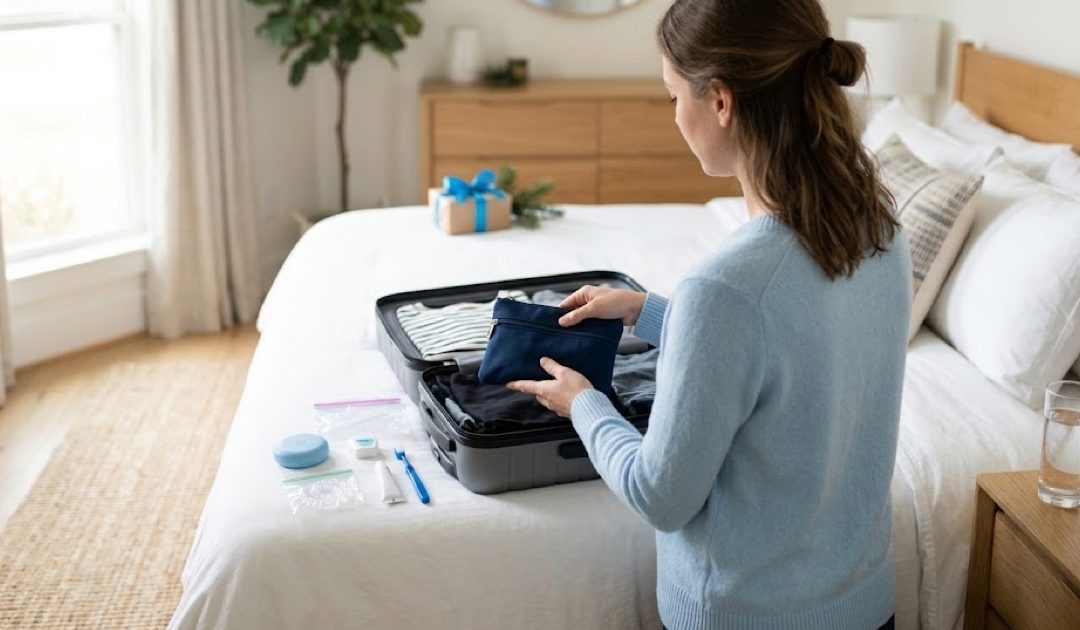
Our holiday page recommends a travel kit with a toothbrush, toothpaste and floss. With aligners, add a few things, and keep the pouch in your carry-on, purse or car console rather than a checked bag.
- Aligner case for the set you’re wearing
- Your previous set, bagged separately, as a backup
- Your next set, if a switch date falls during the trip
- Travel toothbrush and floss
- Travel-size toothpaste. The TSA liquids rule limits carry-on liquids, gels, creams and pastes to 3.4 ounces (100 milliliters) or less per item, in a quart-size bag.
- A note with your current set number and next switch date
- Our number, (972) 547-6453, saved in your phone
If a tray cracks or goes missing on the trip, follow the three-line rule from our Invisalign page for kids, teens and adults:
- Call us for guidance right away.
- Go back to your previous set if you have it and we advise it.
- Never skip ahead to the next set without our approval.
We keep backup sets for most patients and can quickly order replacements. If your child lost the tray, our page on lost aligners explains that Dr. Callison may advise moving to the next aligner, and that replacements are made from the most recent scan.
Pack the previous set every time you leave town, even for a weekend.
When a Tray Switch Lands on a Travel Day
Aligners are worn one to two weeks at a time, and our Invisalign page tells patients to “switch your next aligner as instructed by Dr. Callison.” Between Thanksgiving and New Year’s, one of your switch dates may land on a flight, a road trip or the holiday itself.
- Check your switch dates now and mark each one through the first week of January.
- Call before you leave if a switch falls during the trip, and follow the plan Dr. Callison gives you.
- Don’t switch early to get ahead, and don’t skip a set because the timing is awkward.
Mark every switch date before you travel, and ask us before you change one.
Should You Wait Until January to Start Invisalign?
Many people push the decision to January because the holidays already feel full. That’s a fair instinct, and you can still get your questions answered now.
Our free Invisalign consultation with Dr. Callison includes photos, a 3D digital scan and a preview of your future smile, so you can see what treatment is aiming for before you commit. Our kids, teens and adults page puts adult treatment at typically 12 to 18 months for moderate corrections, and complex cases can take longer. Payment plans and financing are available.
A consult this season gets the planning done, and you still choose when treatment begins.
Frequently Asked Questions
Q: Do I have to take my aligners out for Thanksgiving dinner and dessert?
A: Yes. Invisalign’s guidance is to remove aligners to eat, and that includes dessert and appetizers. Eat in a few planned sittings instead of grazing all afternoon, keep your trays in their case while you eat and brush before they go back in.
Q: Can I drink coffee, wine or cider with my Invisalign aligners in?
A: No. Invisalign’s rule is to take aligners out for anything other than water, and our holiday page notes that coffee, red wine and dark teas stain teeth. Have these drinks with a meal while your trays are already out, then rinse with water and brush before the trays go back in.
Q: What if I’m traveling when it’s time to switch to my next set of aligners?
A: Call us before you leave so Dr. Callison can tell you how to handle that switch, and pack the next set separately. Don’t skip ahead or change your schedule on your own. If a tray is lost or broken on the trip, call us at (972) 547-6453 and wear your previous set if we advise it.
Q: Should I wait until after the holidays to start Invisalign?
A: You can book the free consultation now and decide on timing afterward. It includes photos, a 3D digital scan and a preview of your future smile. Then you and Dr. Callison can pick a start date that fits your holiday plans or the new year.
Enjoy the Season With Your Treatment on Track
A few eating windows, water in between and a packed aligner pouch handle most of what Thanksgiving through New Year’s brings. If something goes wrong away from home, call us.
If you’re looking for an Invisalign dentist in McKinney, TX, or you have questions about your holiday schedule, Dr. Callison’s free Invisalign consultation is an easy place to start. Our team at 1760 W. Virginia St, Suite 100 is glad to help. Call (972) 547-6453 or request a visit online.
Reviewed by the clinical team at McKinney Dentist.
Disclaimer: This content is for educational purposes only and does not replace professional dental advice. Follow the aligner instructions Dr. Callison gives you, since every treatment plan is different. A clinical exam is required for diagnosis and treatment planning.