
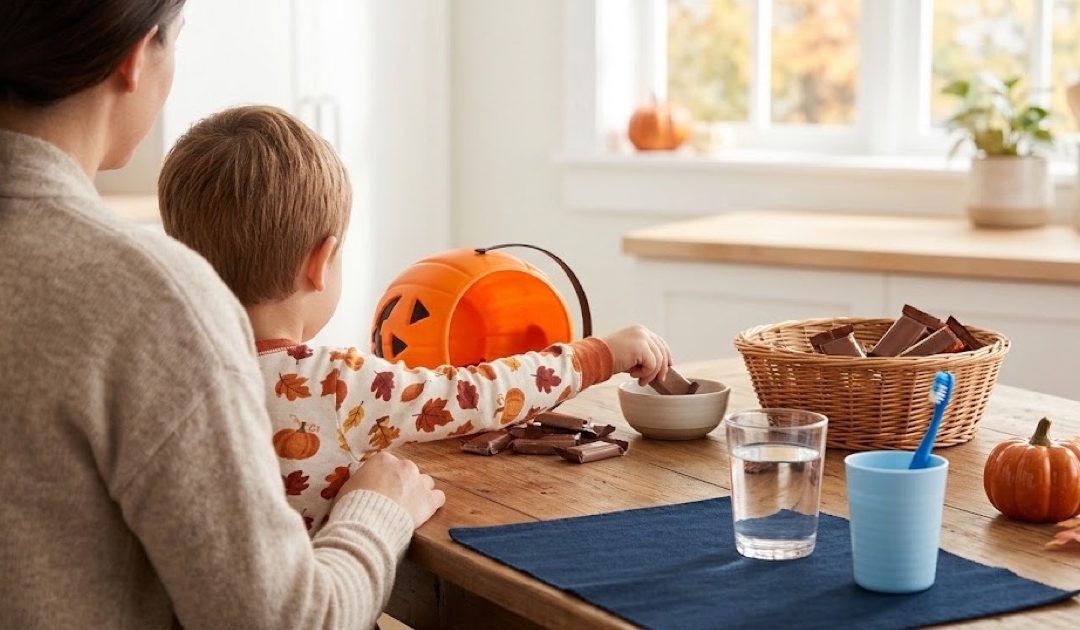
Every November 1 in McKinney, the same scene plays out in thousands of kitchens. A pillowcase gets dumped on the table, a small person guards it like treasure, and a parent wonders how much of this is going to end up as a cavity.
You don’t have to ban candy to protect your kids’ teeth. Some treats are much harder on enamel than others, and how your child eats candy matters more than how much ends up in the bag.
Our team sees the aftermath every year: a chipped molar from a jawbreaker, a filling pulled loose by caramel, sore spots along the gums. Here’s how we rank the typical trick-or-treat haul, and the plan we suggest to families in McKinney, Allen, Frisco, Plano and Prosper for the week after Halloween.
What Makes a Candy Hard on Teeth
Sugar alone doesn’t tell the whole story. When we rank candy, we look at four things:
- Stickiness. Candy that clings to the grooves of back teeth feeds cavity-causing bacteria long after the wrapper is gone.
- Time in the mouth. A lollipop that lasts twenty minutes keeps teeth under attack for twenty minutes. A square of chocolate is gone in seconds.
- Acid. Sour coatings are acidic on their own, before bacteria even get involved, and acid softens enamel.
- Hardness. Hard candy and frozen treats can chip or crack teeth, especially molars with large fillings.
A candy that scores badly on two or three of these deserves a spot at the bottom of the list.
The worst candy for teeth is the one that stays in the mouth the longest.
The Bottom of the Bag: Sticky, Sour and Slow
These are the treats we’d trade away first.
- Sour gummies and sour chews. They combine acid, sugar and stickiness. The powder on sour candy can be acidic enough to etch enamel with frequent use.
- Caramels, taffy and chewy candy. They pack into the grooves of molars and hang on for hours. They’re also a common reason kids come in with a loosened filling, crown or orthodontic bracket after Halloween.
- Lollipops and hard candy. Kids suck on them slowly, which means a long sugar bath. Biting down to finish one is how teeth get chipped.
- Jawbreakers. All the problems of hard candy, plus a real cracking risk.
- Candy corn, gummy candy and fruit snacks. Pure sugar that sticks between teeth.
If your child has braces, a palatal expander or other orthodontic hardware, the sticky and hard candy in this section should go straight to the trade pile. Losing a piece of an appliance to a caramel can mean an unplanned visit. If an expander does come loose, our guide to lost dental expanders walks you through what to do.
The Middle of the Pack
These treats still have sugar, but they’re easier on teeth.
- Chocolate bars with nuts or wafers. They clear the mouth fairly quickly, though caramel-filled bars move down into the sticky category.
- Powdered candy and candy straws. Mostly sugar, and they dissolve fast. The sour versions belong in the bottom group.
- Small bags of chips or pretzels. Not candy, but starchy snacks can still stick in back teeth, so rinse or brush afterward.
One more thing to watch in this group: sodas and fruit drinks at Halloween parties. They’re sugary and acidic, and kids tend to sip them for a long time. Water is the better party drink, and milk with a treat is a good second choice.
Middle-of-the-pack treats are fine in reasonable amounts, eaten at one time rather than all afternoon.
The Best Halloween Candy for Teeth
If there are “better” choices in the bag, these are them:
- Plain chocolate. It melts quickly and washes away more easily than chewy candy. Dark chocolate usually has less sugar than milk chocolate.
- Sugar-free gum. Chewing sugar-free gum after eating gets saliva flowing, which helps rinse away sugar and neutralize acid. Look for gums with the ADA Seal of Acceptance.
- Sugar-free candy. Treats sweetened with xylitol don’t feed cavity-causing bacteria the way sugar does. Too much can upset a stomach, so keep portions small.
- Non-candy treats. Stickers, pencils and small toys are welcome at plenty of McKinney doors these days.
A Ranking Table to Use at the Kitchen Table
Print this or pull it up on your phone while the bag gets sorted.
| Rank | Candy type | Main problem | What we suggest |
|---|---|---|---|
| Worst | Sour gummies, sour chews | Acid plus sticky sugar | Trade them in or save for a meal |
| Very hard on teeth | Caramel, taffy, chewy candy | Sticks in molar grooves, pulls fillings and brackets | Trade them in, especially with braces or expanders |
| Hard on teeth | Lollipops, hard candy, jawbreakers | Long exposure, chipping risk | Never bite down to finish one |
| Moderate | Candy corn, fruit snacks, gummy candy | Sugar that sticks between teeth | Eat with a meal, then rinse |
| Better | Plain chocolate | Sugar, but clears quickly | Pair with water afterward |
| Best | Sugar-free gum, non-candy treats | Little to no sugar | Fine after meals |
A Week-After Plan That Keeps the Peace
The routine around candy matters as much as the candy itself. Here’s what we suggest to McKinney families:
- Pick a candy time. Candy with or right after a meal is easier on teeth than candy spread through the afternoon. Saliva is already flowing at mealtime, which helps clear sugar and acid.
- Let kids choose their favorites. Have your child pick a set number of favorite pieces and trade or donate the rest. Kids feel in charge, and the bag shrinks.
- Keep the stash out of sight. Candy in a visible bowl gets grazed on. Candy in a cupboard gets eaten at candy time.
- Water after treats. A few sips of plain water rinses away sugar. Skip juice and soda as the follow-up.
- Brush twice a day with fluoride toothpaste. The ADA recommends a smear the size of a grain of rice for children under 3 and a pea-sized amount for kids 3 to 6. Help younger kids brush, and floss once a day to reach candy stuck between teeth.
- Wait after sour candy. Acid softens enamel for a while. Have kids rinse with water and wait about 30 minutes before brushing.
A set candy time and a small pile of favorites does more for your child’s teeth than any ban.
How Sealants and Checkups Help
The chewing surfaces of back teeth have deep grooves where sticky candy and plaque settle in. Dental sealants are a thin protective coating our hygienists paint into those grooves. It’s quick, and it doesn’t involve shots or drilling.
Sealants help a lot, but they don’t cover the spaces between teeth, and they don’t make candy harmless. Brushing, flossing and regular visits still matter.
If your child is due for a checkup, the weeks after Halloween are a good time. We can check sealants, look for early soft spots and give your child a pep talk about brushing that sometimes lands better from us than from home. Learn more about our children’s dentistry and how we make visits easy for kids.
When Halloween Candy Turns Into a Dental Problem
Most candy mishaps can wait for a regular appointment. Call us promptly if your child has:
- A chipped or broken tooth, especially with a sharp edge or sensitivity
- A lost filling or crown
- A loose or broken bracket, wire or expander
- Pain when biting, or a tooth that aches on its own
- Swelling in the gums or face
We offer same-day dental care around Halloween and throughout the year when something can’t wait. If you find a chipped piece of tooth, bring it along.
Frequently Asked Questions
Q: What is the worst Halloween candy for kids’ teeth?
A: Sour, sticky candy is usually the hardest on teeth because it combines acid, sugar and a long time in the mouth. Caramels, taffy and hard candy are close behind. Chewy candy is also behind many of the lost fillings and loose brackets we see after Halloween.
Q: Is chocolate really better for teeth than other candy?
A: Plain chocolate clears from the mouth faster than chewy or hard candy, so teeth spend less time exposed to sugar. It still contains sugar, so it’s best eaten at candy time with water afterward. Chocolate with caramel inside belongs with the sticky treats.
Q: Can my child with braces or an expander eat Halloween candy?
A: Soft chocolate without caramel or nuts is usually the safest choice. Skip anything sticky, chewy or hard, since those treats are the ones most likely to bend a wire or loosen a bracket or appliance. If something breaks, call us so we can check it.
Q: Should my child brush right after eating candy?
A: After most candy, brushing is a good idea. After sour candy, rinse with water and wait about 30 minutes, because acid softens enamel for a short time. Sugar-free gum after a treat is a helpful option when brushing isn’t handy.
Book a Post-Halloween Checkup in McKinney
Halloween should be about costumes and fun, not worrying about teeth. If you’d like a checkup after the candy season or a sealant check before the holidays, our team would be glad to see your family.
McKinney Dentist is at 1760 W. Virginia St, Suite 100, and we see kids and adults under one roof. Call (972) 547-6453 or request an appointment online.
Reviewed by the clinical team at McKinney Dentist.
Disclaimer: This content is for educational purposes only and does not replace professional dental advice. A clinical exam is required for diagnosis and treatment planning.