
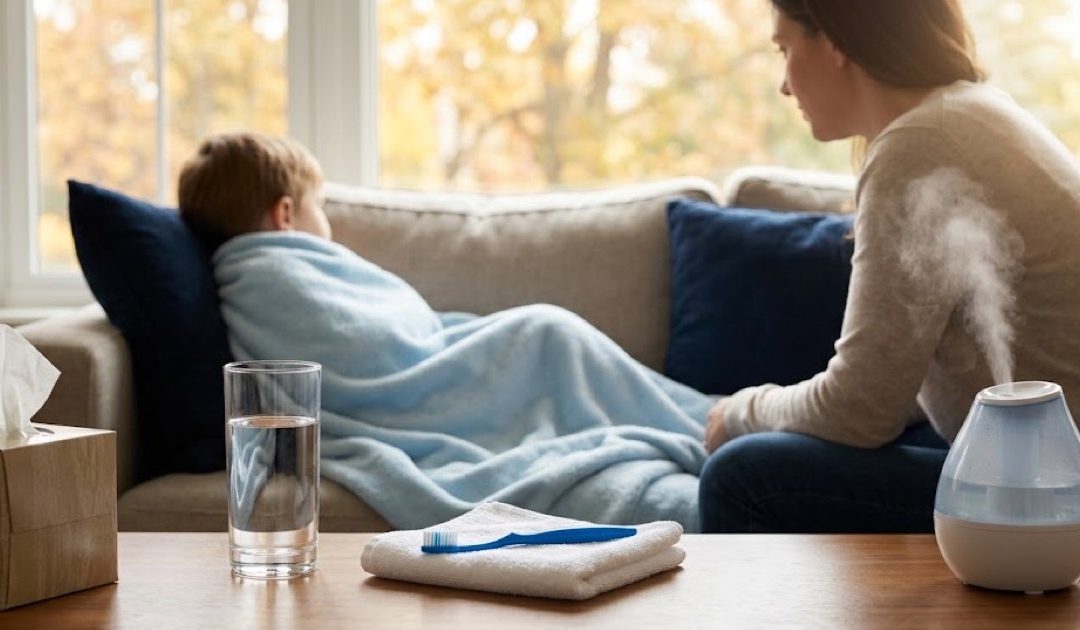
When you’re sick, brushing your teeth is the last thing on your mind. You’re sleeping in odd shifts, living on cough drops and orange juice, and breathing through your mouth because your nose quit working two days ago.
That’s normal, and nobody expects a perfect routine from someone running a fever. But a week of sick-day habits can leave a mark on your teeth, especially for kids who spend a cold sucking on sweet medicine and lozenges. We see it in the chair every winter: new soft spots near the gumline that line up almost exactly with a bad flu a few months earlier.
October is National Dental Hygiene Month, recognized by the American Dental Hygienists’ Association, so our hygiene team put together the sick-day advice we give families in McKinney, Allen, Frisco, Plano and Prosper. None of it takes more than a minute, and all of it is doable from the couch.
Why a Cold Can Be Rough on Your Teeth
A cold or flu changes your mouth in a few ways at once. Each one is small. Together, they add up over a week or two.
- Dry mouth. A stuffy nose forces you to breathe through your mouth, especially at night. Many decongestants and antihistamines also reduce saliva. Saliva is what rinses away sugar and neutralizes acid, so less of it means more time for plaque to work.
- More sugar, more often. Cough drops, syrups, juice, sports drinks and popsicles all land on your teeth, often every hour or two.
- Acid. Vomiting, reflux from coughing, and citrus drinks all put acid on enamel.
- Skipped brushing. When you feel awful, the evening brush is the first thing to go.
On a sick day, the goal is to interrupt that combination a few times a day. A flawless routine can wait until you feel better.
Cough Drops, Syrups and Sweet Medicine
Most cough drops are hard candy with a little menthol. Sucking on one every hour bathes your teeth in sugar all day, which is about the worst pattern for cavities.
You don’t have to give them up. A few changes help:
- Look for sugar-free cough drops. Many common brands make them. Check the label for sugar alcohols such as xylitol or sorbitol instead of sugar or corn syrup.
- Give liquid medicine with a meal when the label allows it. Food and the saliva that comes with eating help clear it.
- Rinse with water after each dose, or have your child take a few sips of water.
- Brush after the bedtime dose, not before it. A sweet syrup sitting on teeth all night is the one we most want to avoid.
Always follow the dosing directions from your pharmacist or physician. We’re only talking about what happens to your teeth, not about which medicine to take.
For kids, the bedtime syrup plus a skipped brush is the single habit most worth fixing.
Dry Mouth From Congestion and Cold Medicine
If you wake up with your tongue stuck to the roof of your mouth, you’re mouth breathing, and your teeth have spent the night without their usual protection. Dry mouth also makes breath worse and can leave your lips cracked and sore.
Here’s what helps while you recover:
- Keep a glass or bottle of plain water by the bed and sip through the night when you wake up.
- Run a cool-mist humidifier in the bedroom if you have one.
- Chew sugar-free gum or use a sugar-free lozenge during the day to get saliva moving.
- Skip alcohol-based mouthwash while your mouth is dry. Our guide to choosing the right mouthwash explains the alcohol-free options.
If dry mouth hangs around long after the cold is gone, mention it at your next visit. Ongoing dryness has other causes worth checking, and our post on dry mouth after 50 covers the most common ones.
Sports Drinks, Juice and Staying Hydrated
Fluids matter when you’re sick, and your physician may recommend an electrolyte drink. That’s fine. Many sports drinks and juices, though, are both sugary and acidic, which is a double hit on enamel.
A few ways to keep hydration from costing you a filling:
- Make plain water your main drink and use sports drinks or juice as directed, not as an all-day sipper.
- Drink them with a straw when you can, so less liquid washes over the front teeth.
- Finish the glass in one sitting rather than nursing it for an hour.
- Follow with a few sips of water.
Popsicles and ice chips are great for a sore throat. Just let ice melt instead of crunching it, since chewing ice can chip teeth and crack fillings.
Hydration comes first. We only want you to be smart about what you’re sipping and how often.
If You’re Sick to Your Stomach
Vomiting brings stomach acid into your mouth, and that acid softens enamel. Brushing right away scrubs the softened surface, which is why we recommend a different order:
- Rinse with plain water, or a cup of water with about a teaspoon of baking soda stirred in.
- Wait about 30 minutes to an hour before you brush.
- Brush gently with a soft brush and fluoride toothpaste.
The same order works after heavy coughing spells that bring up reflux. If repeated acid episodes become a pattern, our page on enamel erosion causes and treatment explains what we look for and how we protect worn areas.
Should You Replace Your Toothbrush After Being Sick?
The American Dental Association recommends replacing your toothbrush every three to four months, or sooner if the bristles are frayed. The evidence that an old toothbrush reinfects you with the same cold is limited, so you don’t have to panic.
Still, the end of an illness is a good moment to swap it out. It’s cheap, it’s easy to remember, and many families find it simpler to tie brush changes to events than to a calendar.
What matters more during the illness:
- Don’t share toothbrushes, and keep a sick family member’s brush from touching the others in the cup.
- Rinse the brush well and store it upright to air-dry. Closed travel caps keep brushes damp, which isn’t what you want.
- Swap electric toothbrush heads on the same schedule as a manual brush. Our page on electric toothbrushes covers head changes and brushing time.
One new brush for each person after the house recovers is an easy family rule to keep.
A Sick-Day Routine You Can Do From the Couch
When you only have energy for the basics, this is the minimum we’d ask for:
| Time | What to do | Why it helps |
|---|---|---|
| Morning | Brush with fluoride toothpaste, even if it’s quick | Clears the plaque that built up overnight in a dry mouth |
| After each sweet medicine or cough drop | Sip or rinse with water | Cuts down the time sugar sits on teeth |
| After vomiting or reflux | Rinse, wait, then brush gently | Protects softened enamel |
| All day | Water as your main drink | Keeps saliva flowing and helps you recover |
| Bedtime | Brush after the last dose of syrup | Keeps sugar off teeth overnight |
Flossing can wait a day or two if you truly can’t manage it. Brushing twice with fluoride is the part to protect. Our oral hygiene instructions have the full routine for when you’re back on your feet.
Should You Keep Your Dental Appointment?
If you have a fever or you’re coughing hard, call us and move your visit. Lying back in the chair with a stuffed nose is uncomfortable, and you’ll get more out of your appointment once you’re breathing freely.
If a tooth starts hurting while you’re sick, don’t assume it’s the cold. Sinus pressure can make upper back teeth ache, but a tooth that hurts on its own or stays sensitive after the congestion clears deserves a look. Call and describe what you’re feeling, and our team will help you decide how soon to come in.
Once you’ve recovered, get back on your regular dental cleaning schedule. Our hygienists can spot early soft spots from a rough winter before they turn into cavities.
Frequently Asked Questions
Q: Do I really need a new toothbrush after I’ve had the flu?
A: It isn’t strictly required, since the evidence that a toothbrush reinfects you is limited. The ADA recommends a new brush every three to four months or when bristles fray, and the end of an illness is an easy time to make the change. Keep the sick person’s brush apart from everyone else’s while they recover.
Q: Are sugar-free cough drops actually better for my teeth?
A: Yes. Regular cough drops are essentially hard candy, and sucking on them all day keeps sugar on your teeth for hours. Sugar-free versions sweetened with xylitol or sorbitol don’t feed cavity-causing bacteria the same way. Follow the package directions for how many to use.
Q: Why does my mouth feel so dry when I have a cold?
A: Congestion makes you breathe through your mouth, especially while you sleep, and many decongestants and antihistamines reduce saliva. Water by the bed, a humidifier and sugar-free gum during the day all help. If dryness continues after you’ve recovered, let us know at your next visit.
Q: Should I brush right after I throw up?
A: No. Rinse with water or baking-soda water first, then wait about 30 minutes to an hour before brushing gently. Stomach acid softens enamel, and brushing too soon can wear away the softened surface.
Get Your Family Back on Track After a Rough Season
A cold lasts a week. The habits around it can affect your teeth for much longer. If your family spent part of the fall sick and you’d like our team to check for early trouble, we’ll look closely and keep any fix as small as possible.
McKinney Dentist cares for kids and adults at 1760 W. Virginia St, Suite 100, and our family dentistry team can often schedule siblings back to back. Call (972) 547-6453 or request a visit online.
Reviewed by the clinical team at McKinney Dentist.
Disclaimer: This content is for educational purposes only and does not replace professional dental or medical advice. Follow your physician’s or pharmacist’s directions for any medication. A clinical exam is required for diagnosis and treatment planning.