
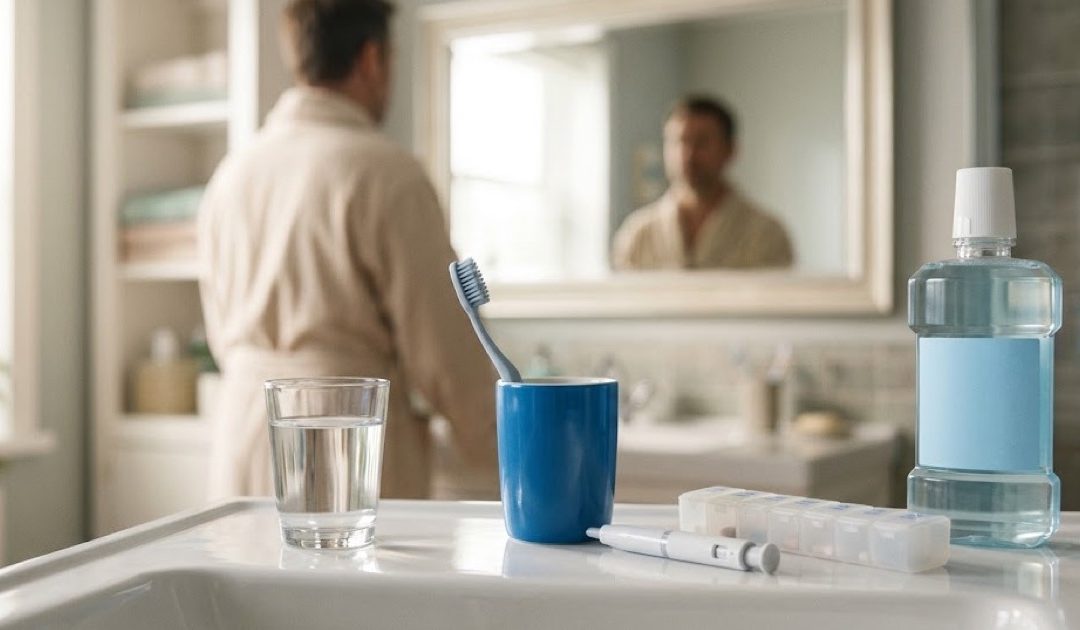
A few months into semaglutide or tirzepatide, many of our McKinney patients notice the same cluster of changes. The mouth feels dry by mid-morning. Breath is worse. Cold water stings a tooth that never bothered you before. Most people chalk it up to eating less and never mention it at their cleaning.
GLP-1 receptor agonists, the drug class behind Ozempic, Wegovy, Mounjaro and Zepbound, change thirst, saliva, digestion and eating patterns, and every one of those changes reaches your teeth and gums. Your medication may be doing exactly what you and your physician hoped. Your dental routine still needs to adjust while you are on it.
This guide explains why these medications show up in your mouth, what our team at McKinney Dentist recommends for each side effect, and how to tell a dry-mouth nuisance from a problem that needs an exam. Medication decisions stay with your prescribing physician. Our job is to keep your mouth healthy while that plan does its work.
Why a GLP-1 Medication Shows Up in Your Mouth
These medications slow stomach emptying and blunt appetite. That is how they help with weight and blood sugar, and it is also where the trouble for your enamel begins.
- Less thirst and less saliva. Reduced saliva is a side effect associated with several medication classes, and patients also tend to drink less. Saliva is your mouth’s buffer; with less of it, acid sits on teeth longer and bacteria multiply faster.
- Nausea and reflux. Slower digestion means stomach acid lingers, and some patients report reflux or vomiting, particularly in the weeks after a dose change.
- Smaller, more frequent meals and constant sipping. Grazing on snacks or nursing a flavored drink keeps the mouth acidic for hours instead of minutes.
The American Dental Association lists GLP-1 receptor agonists among the medication classes associated with oral dryness. Healthline’s coverage of what some patients call “Ozempic teeth” describes the same reported cluster: dry mouth, reflux-related erosion, gum inflammation and sensitivity. The human evidence is still indirect, so treat these as patterns to watch for.
The medication changes the environment around your teeth, and that environment can be managed.
Tell Us at Check-In, Even If Nobody Asks
Our health history form asks about medications, but GLP-1 drugs are often started between visits and easy to leave off a form. Tell us anyway, at the front desk or when your hygienist seats you.
Knowing you are on it changes what we look for during a routine dental check-up. We look for signs of dryness, check the tongue side of the upper front teeth where reflux wear tends to show first, and note gum changes. In our experience that wear is usually visible to us before you have felt anything.
A thirty-second mention at check-in is the most useful thing a GLP-1 patient can do for their teeth.
Side Effect, What It Does in Your Mouth, What We Recommend
Every row assumes you continue your medication exactly as prescribed.
| Side effect | What it does in your mouth | What we recommend |
|---|---|---|
| Dry mouth | Less buffering of acid, more plaque, higher cavity risk near the gumline | Sip plain water all day, use a dry-mouth rinse or xylitol lozenge, and ask us about prescription-strength fluoride toothpaste |
| Reflux or nausea | Stomach acid softens enamel, usually on the tongue side of the upper front teeth and the chewing surfaces of molars | Rinse with water or baking-soda water right after an episode, wait 30 minutes to brush, and tell your physician if reflux is frequent |
| Reduced appetite and grazing | Frequent snacks and flavored drinks extend acid exposure; protein shakes and electrolyte mixes are often acidic or sweetened | Group eating into defined meals, finish drinks rather than sipping for hours, and rinse with water afterward |
| Bad breath | Bacteria flourish without saliva to wash them away | Clean your tongue daily, stay hydrated, use an alcohol-free rinse; persistent odor with bleeding gums needs an exam |
| Dehydration | Thicker saliva, a coated tongue, more sores and cracked lips | Set a daily water target with your physician or dietitian and keep a bottle within reach |
Print this table. Most GLP-1 mouth problems respond well to the right-hand column when we catch them early.
The GLP-1 Dental Check-In Checklist
Bring this list to your next cleaning at our 1760 W. Virginia St office. Six things to mention:
- The medication name, dose, and start date. Dose increases can bring a fresh round of nausea.
- How dry your mouth feels, and when. Morning dryness often points to mouth breathing; afternoon dryness usually tracks hydration.
- Any reflux, heartburn or vomiting, and how often.
- What you drink between meals. Sparkling water, electrolyte packets and sugar-free sodas all count.
- New sensitivity to cold, sweet or air. Note which tooth and when it started.
- Bleeding when you brush or floss. Even a little, even once a week.
Answering these six questions takes two minutes and gives us most of what we need to adjust your preventive plan.
After a Reflux Episode: The First 30 Minutes
If reflux or vomiting is part of your experience on the medication, the next half hour matters. Acid leaves enamel temporarily softened, and brushing in that window scrubs away the softened layer.
Rinse instead. Plain water works; half a teaspoon of baking soda in a glass of water works better because it neutralizes acid. Swish, spit, and leave the toothbrush alone for at least half an hour.
Our page on enamel erosion causes and treatment explains what drives that wear and how we treat it. Lost enamel does not grow back, so the goal is to stop the process early. If reflux is frequent, please raise it with your prescribing physician.
Rinse first, wait at least 30 minutes, then brush. It is the one habit we ask every reflux-prone patient to keep.
Dry Mouth, Bad Breath, and Choosing the Right Mouthwash
Dry mouth and bad breath usually arrive together on these medications, and the strongest-tasting mouthwash on the shelf is the wrong answer. Alcohol-based rinses dry tissue further.
Look for an alcohol-free rinse labeled for dry mouth, ideally with fluoride or xylitol. Our guide to choosing the right mouthwash explains how to read the label. For breath specifically, the tongue is where most odor-causing bacteria live, so a tongue scraper does more than most rinses.
If breath stays bad despite hydration and tongue cleaning, the source is often below the gumline. Our page on reducing bad breath walks through the common causes, and gum inflammation is high on that list for GLP-1 patients.
Alcohol-free, with fluoride or xylitol, used at night: that is the mouthwash category for a GLP-1 dry mouth.
Ask Whether a Four-Month Hygiene Interval Makes Sense
Standard six-month recalls assume normal saliva and a stable diet. On a GLP-1, neither holds for many patients during the first year. Tartar that forms in month four cannot be brushed off in month five.
We do not shorten everyone’s interval by default. At your visit, ask whether a four-month schedule for dental cleanings fits your dryness, your gum readings and any erosion we see. For patients with noticeable dryness or early gum inflammation, we may suggest that extra visit.
Ask about a four-month interval. We will base the answer on what we see.
When Sensitivity or Bleeding Gums Mean an Exam, Not a New Toothpaste
Mild cold sensitivity that improves with a sensitivity toothpaste over two weeks is usually a dry-mouth or early-erosion issue hydration and fluoride can settle. Sensitivity that sharpens, lingers after the cold is gone, or focuses on one tooth needs an exam that tests the tooth’s response, plus an X-ray.
Bleeding gums follow the same logic. Bleeding that persists, or gums that look puffy or red, points toward inflammation we treat in the office; our page on gum disease treatment explains what that involves.
There is also an upside. Patients who lose weight and bring blood sugar under control often see gum health improve, since inflammation throughout the body tends to ease as metabolic health does. We see that shift in the chair fairly regularly.
Two weeks of a sensitivity toothpaste is a fair trial. Beyond that, or with any bleeding that persists, book an exam.
See also: dry mouth after 50.
Frequently Asked Questions
Q: Do I need to tell my dentist I am taking Ozempic, Wegovy, Mounjaro or Zepbound?
A: Yes, at every visit, since doses change. These medications alter saliva, digestion and eating habits, which can raise your risk of cavities, erosion and gum inflammation. Knowing you are on one tells us where to look during the exam and whether to suggest fluoride, a dry-mouth rinse or a shorter cleaning interval. We do not change or advise on the prescription itself.
Q: Why does my mouth feel so dry and my breath worse since starting a GLP-1?
A: Reduced thirst and appetite mean many patients drink less, and reduced saliva is a side effect associated with this drug class. With less saliva, bacteria are not rinsed away, plaque builds faster, and the tongue collects more odor-causing debris. Hydration and daily tongue cleaning address most of it.
Q: Should I get my teeth cleaned more often while on a weight-loss medication?
A: For some GLP-1 patients we may suggest a four-month cleaning interval, particularly during the first year, when dryness and reflux tend to be most noticeable. We base that recommendation on your saliva, gum measurements, plaque levels and any signs of erosion.
Q: Can the acid from nausea or reflux permanently damage my enamel?
A: Yes. Repeated acid exposure can dissolve enamel, and enamel does not grow back once lost. The damage is gradual, so early habits matter: rinse with water or baking-soda water after an episode, wait at least 30 minutes before brushing, and use fluoride daily. Frequent reflux should be discussed with your prescribing physician, since managing it is a medical decision.
Ready to Talk Through Your GLP-1 Dental Plan?
If you are on semaglutide or tirzepatide in McKinney, Allen, Frisco, Plano or Prosper and have noticed dry mouth, new sensitivity or worse breath, we would like to see you before a small problem becomes a filling. Bring the checklist above and we will build a personalized treatment plan around your medication timeline.
Our team at McKinney Dentist handles exams, cleanings, erosion treatment and gum care all under one roof at 1760 W. Virginia St, Suite 100, with same-day dentistry available when a sensitive tooth needs more than monitoring. Call (972) 547-6453 or request a visit at https://mckinneydentist.com/contact-us/ and mention your GLP-1 medication.
Reviewed by the clinical team at McKinney Dentist.
Disclaimer: This content is for educational purposes only and does not replace professional dental or medical advice. A clinical exam is required for diagnosis and treatment planning.